
Checking for a Warrant in Fayette County
Match the court and city printed on the notice. Fayette County publishes no verified sheriff warrant portal. Call the sheriff about county custody or service, and bring the citation or case number, the city, or the JP precinct when you reach the issuing court. That court's website offers contacts, jail details, and open-records information, not a searchable warrant roster. A birth date helps staff separate files. Ask what the office may disclose, since a blank search result is not a court order.
- Read the notice and note the court or issuing city.
- Call the sheriff at (979) 968-5856 for custody and service routing.
- Call the District Clerk, County Clerk, JP precinct, or municipal court that holds the case.
- For a reported ticket hold, check the court first, then contact the Texas DPS program if needed.
- Ask a lawyer about a warrant, bond, voluntary appearance, or motion before acting.
Fayette County Sheriff Has No Warrant Portal
Fayette County's sheriff posts no public warrant portal. The official pages give a phone route, corrections information, and an Open Records contact instead. You will find no warrant form there. No dedicated phone menu or active-list schedule exists either. A blank result elsewhere proves nothing. One unrelated website cannot tell you whether a Fayette County warrant exists. For a county question, call the Texas sheriff's main number and ask whether the office can confirm a county-held warrant or point you to its issuing court. For a case, ask the clerk or judge. The office holding the case record decides whether a process was recalled, served, or still active. The official sheriff profile sets out that county role, since the sheriff and the courts each hold different parts of the local process.
Fayette County Warrant Types
Labels matter here. A missed traffic date, a felony charge, and a search order follow different rules and point to different offices. Fayette County's lower bench has four JP precincts. Several municipal courts sit alongside them. Felony files generally lead to the 155th Judicial District Court and its clerk, though the county says JPs issue felony and traffic warrants too.
| Process | Local meaning | First office |
|---|---|---|
| Arrest warrant | Order to arrest after a probable-cause review | Issuing court, then sheriff or serving officer |
| Bench / FTA process | Missed setting, promise to appear, or court instruction | Court named on the citation or case |
| Capias pro fine | Justice or municipal case after a judgment and required process | JP or city municipal court |
| Search warrant | Order to search for items described in a sworn affidavit | Issuing magistrate or court |
Fayette County Courts Divide Warrant Work
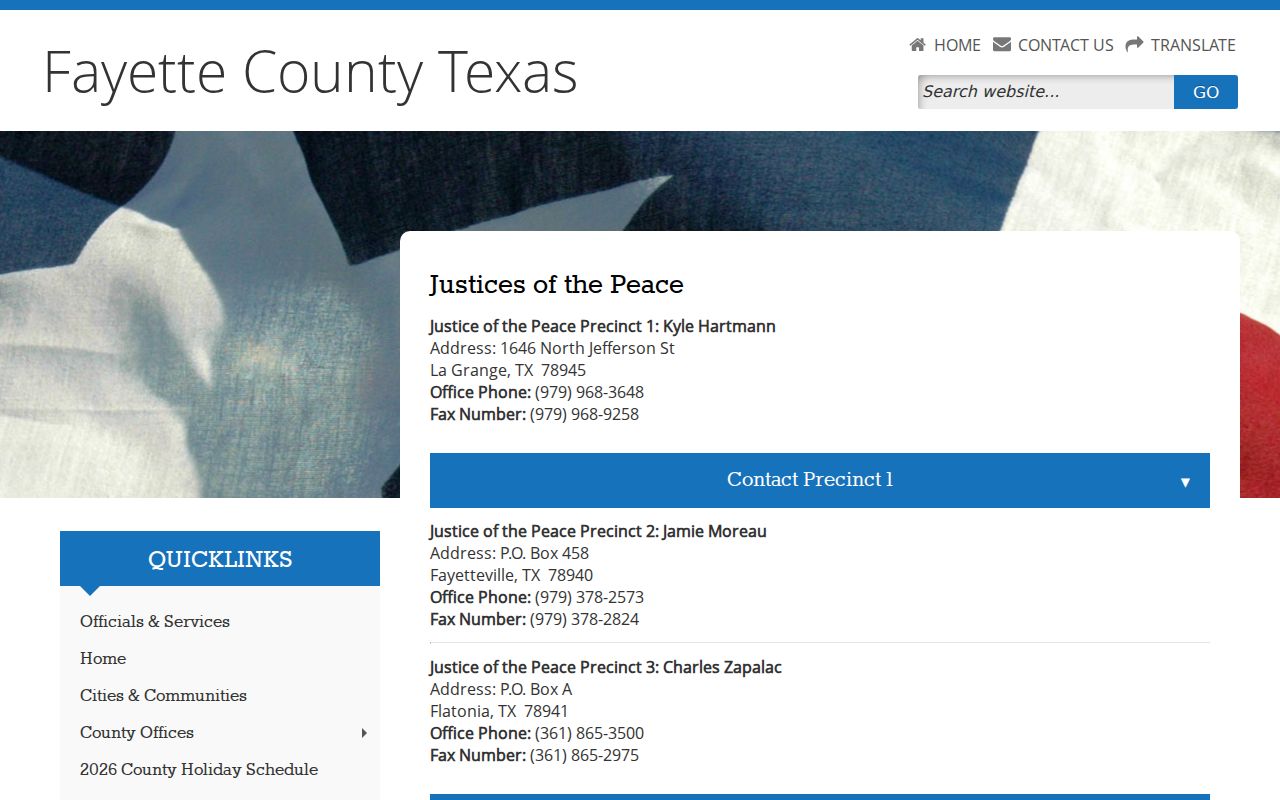
Warrant work in Fayette County is split across several courts. The 155th Judicial District Court hears felony, family, civil, and child-protection cases. It does not take traffic tickets. County Court matters run through the County Clerk and County Court. A JP citation goes to one of four precincts. A city ordinance or traffic case belongs to that city's municipal court. Fayette County's files can meet at the Justice Center without merging into one system. JP1 sits at the Justice Center in La Grange. JP2 covers the Fayetteville area. JP3 serves Flatonia, and JP4 serves Schulenburg. Check the precinct printed on your citation before using a payment or plea sheet, since the county lists a separate phone for each office. The county's Justice of the Peace page lays out the four offices and their criminal, traffic, and magistrate work.
Inside a Fayette County Warrant Record
Fayette County publishes no sample warrant entry. No official warrant-number format is public either. Treat any example number floating around online as a made-up identifier rather than a real Fayette County record. When you ask the clerk or sheriff to pull a file, request the fields below, since some stay closed or depend on the kind of process.
| Case or cause number | The court’s case reference. The county has not published a standard warrant-number pattern. |
|---|---|
| Issuing court | The 155th District Court, County Court, one of four JP precincts, or a municipal court. |
| Process type | Arrest warrant, capias, capias pro fine, FTA, traffic process, or another hold. |
| Bond and status | Ask whether a bond applies and whether the process is active, served, recalled, or quashed. |
| Identity details | Use details the office requests. Full birth dates and juvenile information may be restricted. |
Fayette County has posted no status codes. No complete display schema exists either. Staff may confirm a record without opening every field, so write down the court, the staff direction, and any next date or order the clerk gives you.
Fayette County Warrants Have No Single Index
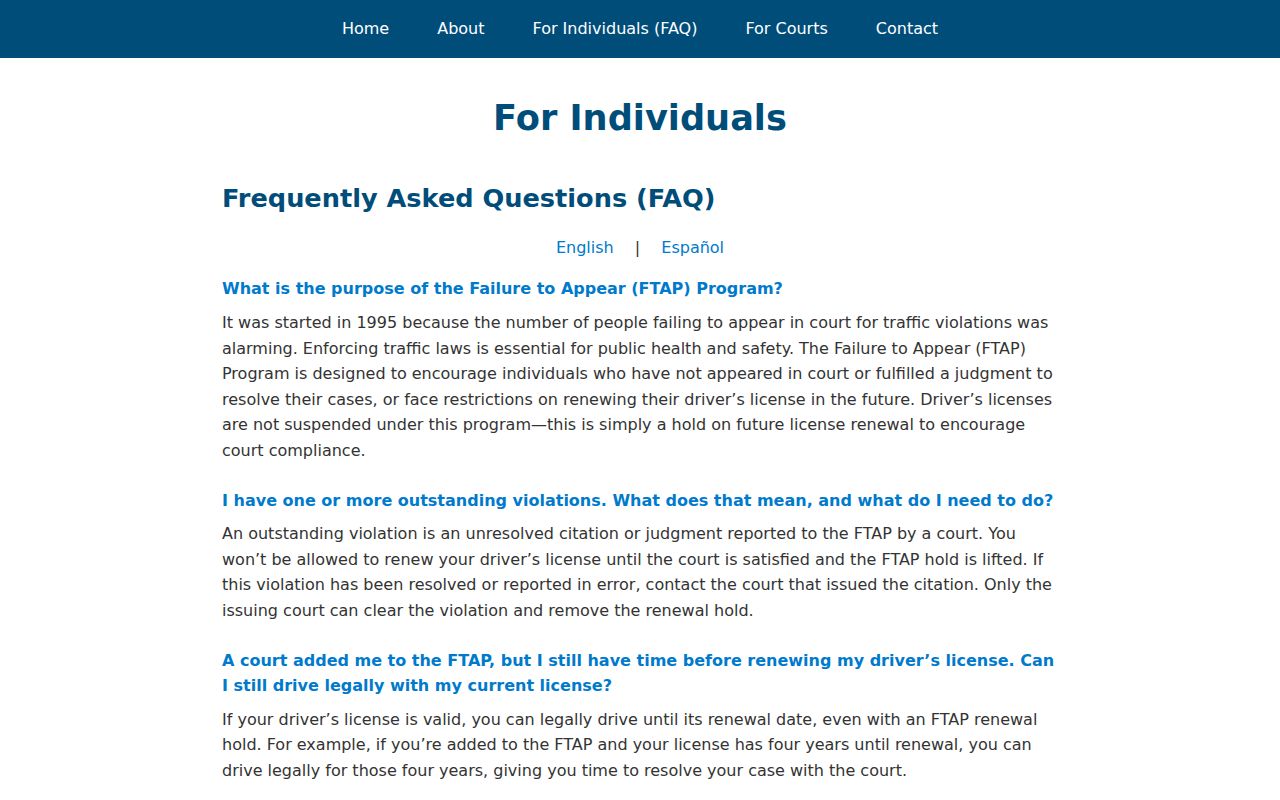
Texas runs no statewide public warrant database. The Texas DPS Failure to Appear / Failure to Pay program, often called OmniBase, covers far less ground. It lists violations that participating courts report for driver-license renewal compliance. It is not a repository of arrest warrants. DPS license staff cannot confirm warrant status. A Fayette County court can hold a record that never reaches a sheriff list. A new order may sit unrouted. A recalled order can linger in a case file. Juvenile or sealed records can stay closed by law. So check the office that issued the process, and ask the sheriff about county custody only when that is the question. The DPS program page explains the license-compliance role, but it does not replace a call to the Fayette County court that holds your file.
Issuing and Serving Warrants in Fayette County
A judge or magistrate issues the warrant. The clerk keeps the case record, and a sheriff, constable, city police officer, or other authorized peace officer may serve it. Fayette County has four constables. The county says they execute and return process directed to them, though no single constable serves every warrant.
Fayette County Sheriff’s Office
1646 North Jefferson Street
La Grange, Texas 78945
(979) 968-5856
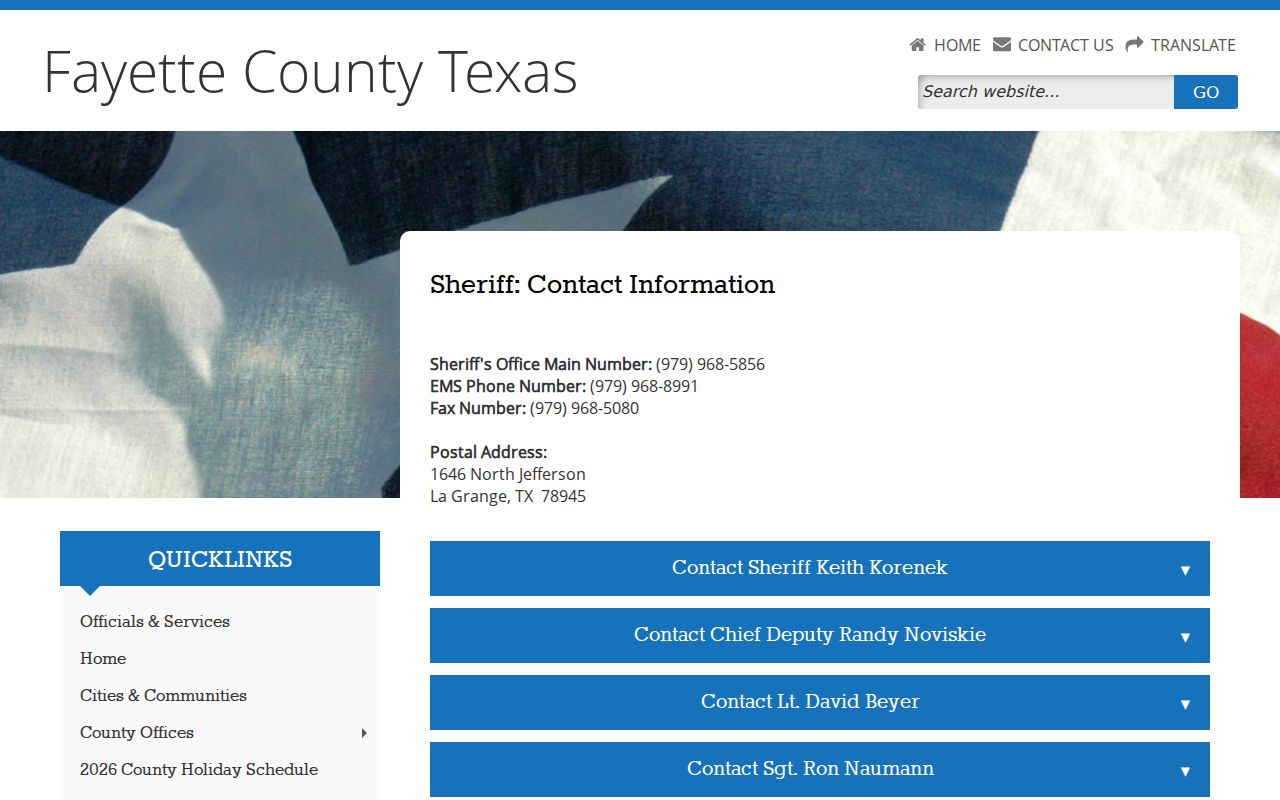
The sheriff contact page names Fayette County's Open Records Custodian. It also gives the main number, and judicial records requests go to the District Clerk, County Clerk, or the issuing JP or city court.
Fayette County Sheriff Is the Custody Hub
The Justice Center at 1646 North Jefferson in La Grange houses both the county jail and JP1. When Fayette County deputies arrest someone, the sheriff holds that person here. That makes it a key custody and bond contact. It is not every court's records office, though. A linked jail page lists conflicting out-of-state phone details, so use the Texas main number and confirm bond instructions with the issuing court. The sheriff posts no surrender window, warrant-counter hours, or universal bond schedule. The official corrections page describes the Justice Center and its jail operation.
If You Have a Fayette County Warrant
Before you pay or appear on a Fayette County warrant, pin down the court, the process type, its current status, and the next step. A lawyer can ask whether a reset, recall motion, walk-through, bond, or payment plan fits the case. Payment alone may not clear the arrest warrant. It may not resolve the charge either.
Important: Call the issuing court and speak with counsel before surrendering; a court order or bond step may be needed even after payment.
A JP or municipal capias pro fine has a recall path under Texas law. The path opens when a person gives notice for a hearing, or appears voluntarily and makes a good-faith effort to resolve the judgment. Ask the Fayette County court what it requires. Ask how it will record the result. Keep the order, receipt, bond certificate, or written confirmation.
The La Grange Amnesty Was Time-Limited
La Grange ran a warrant amnesty from November 3 through December 1, 2025, and it was a city program, not a Fayette County one. The form waived warrant fees. Payment in full brought a 75 percent fine discount. A payment plan brought 50 percent. Court costs and collection charges were never included. Enrollees gave a name, a plea, a payment choice, and a list of their cases. La Grange wanted pay-in-full amounts, and half of any plan balance, within 24 hours. The remaining plan balance came due within 90 days. Until that balance cleared, the warrant and the license hold stayed active. People with existing agreements or judgments could not enroll. The program is finished unless La Grange publishes a new one, so an old form is not a live offer anywhere in Fayette County. For current court service details, use the La Grange municipal-court contact page.
Fayette County Warrant Records and Public Access
The Texas Public Information Act covers many government records. Judicial records are different. Fayette County's handout says they are not requested under that Act. For a sheriff record, write to the department holding it; for a court file, ask the clerk or judge which access rule applies. A wrong office just slows the request. Copy or retrieval costs can apply too.
Access rules:
Texas Government Code Chapter 552 sets public-information access and exceptions.
Code of Criminal Procedure Article 15.26 makes an executed arrest warrant and supporting affidavit public, subject to other law.
Texas Family Code Section 58.010 protects juvenile arrest-warrant information, with limited authorized access.
A public-access rule does not put every record online. Fayette County offices still withhold some files, so ask what can be released.
Fayette Records Requests Need the Right Office
Fayette County's written request handout tells you to describe the record and send the request to the department that holds it. One elected office does not keep another office's records. The sheriff's site names Renee Moreland as Open Records Custodian. Call the sheriff's main number for the current route. The sheriff publishes no warrant-specific online request form, no set fee, and no response promise. Judicial records go to the court clerk or the judge, not the sheriff's general Public Information Act channel. A tight request helps. Name the court, the case or citation number, the type of record, and a date range if you know one. Those details help. They are not a published Fayette County form requirement. The county forms page links the public-information material, and the handout explains the clerk-and-judge route for judicial files.
Fayette County Warrants by City
Fayette County's five largest incorporated places come from the 2020 Census count. They handle warrants differently. Some publish clear police and court routes, while others post no warrant portal or municipal-court contact page.
La Grange
4,391 residents in 2020. Municipal court and a time-limited 2025 amnesty form were published.
Schulenburg
2,633 residents. Police and municipal-court pages give separate routes.
Flatonia
1,308 residents. The city lists a police department and municipal court at City Hall.
Fayetteville
246 residents. A city link and JP2 route are verified; a city warrant page was not.
Carmine
244 residents. The city office is listed, but no police or court warrant page was found.
The county communities page maps Fayette County's places. A city citation still goes to the court named on it.
Fayette County Has No Published Warrant Total
Fayette County publishes no active-warrant count. No annual warrant total or roundup outcome appears in its reports, budget, news, or court pages. Do not back into a number from the jail population, an out-of-state search result, or a Crimestoppers reward history. Those measure different things.
The sheriff's profile describes a service population above 25,000, with the Census comparison from 2020. Neither measures Fayette County warrant volume.